

From time to time, scammers create faux organizations or publishing industry groups in order to enhance the appearance of legitimacy or to run a fraud. Some of these are quite elaborate, with large, well-designed websites (and, occasionally, text plagiarized from legitimate sources they’re imitating). I’ve covered a few of these sleazy efforts over the past couple of years.
Herewith, a couple of new outfits that flunk the reality test.
INDEPENDENT LITERARY RECOGNITION GUILD
I became aware of the Independent Literary Recognition Guild (ILR) thanks to comments on another of my blog posts from writers who’d been contacted to buy ads in its magazine. (The pay-to-play magazine racket–whether the fees are for interviews or ads–is a well-established pitfall for writers; I’ve written about it a number of times. Even when not a scam, it’s a dubious investment, especially if you can’t determine subscription or circulation numbers.)
According to its About page, ILR is a kind of publishing industry policeman, “dedicated to the pursuit of setting equitable and honorable standards for Agencies, Firms, or any Organization establishing business related to publication and literary arts.” In addition to offering membership ($99 per year), ILR’s claimed activities include a series of awards, a conference (the most recent one is said to be the organization’s 69th), the aforementioned magazine (with a hefty subscription price of $99/year for digital and $199/year for print), and the selling of editing services. There’s even a form to report writing scams and other literary malfeasance, in response to which ILR pledges to conduct “an investigation” (sound familiar?)
It all appears quite credible, at least at first glance. On close examination…not so much.
For example, ILR’s history.

Big if true, as they say on social media. However, although ILR has had a Facebook page since 2020, its domain registration is just 59 days old, and its Delaware business registration is even more recent: October 2, 2024.
Doesn’t seem to fit with a company operating since 1986. On the other hand, ILR has a UK web domain; could it be that it’s a British organization that has only recently expanded to the States? Not really. In fact, per its Companies House listing, it doesn’t even exist: it was dissolved by compulsory strikeoff in August 2023.
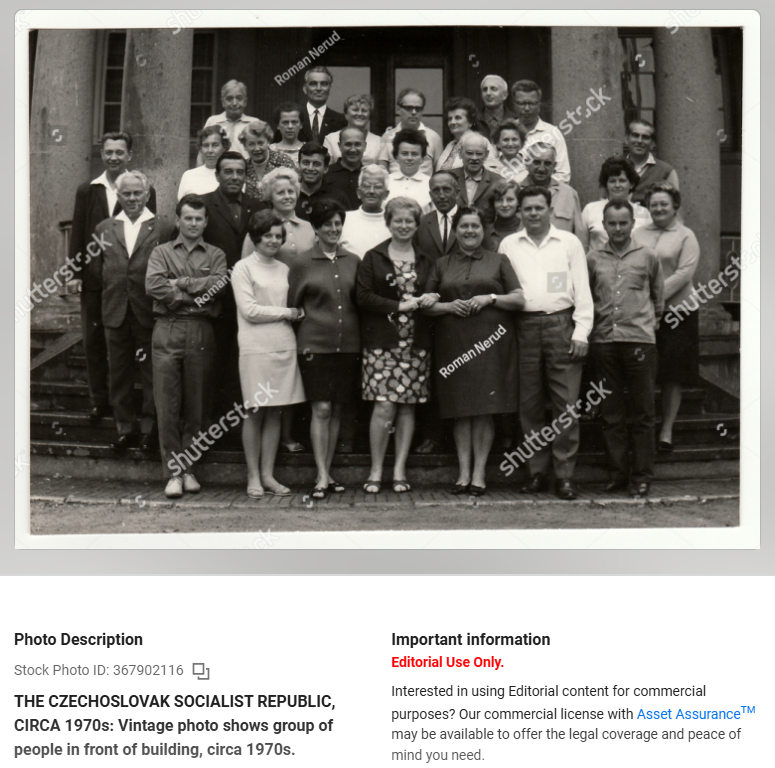
And see that photo? It’s not ILR. It’s not even from the 1980s. (Google Lens and Tineye.com are my go-tos for reverse image searches, which often can unmask fraud on a suspicious website.)
Also a head-scratcher, from ILR’s homepage:
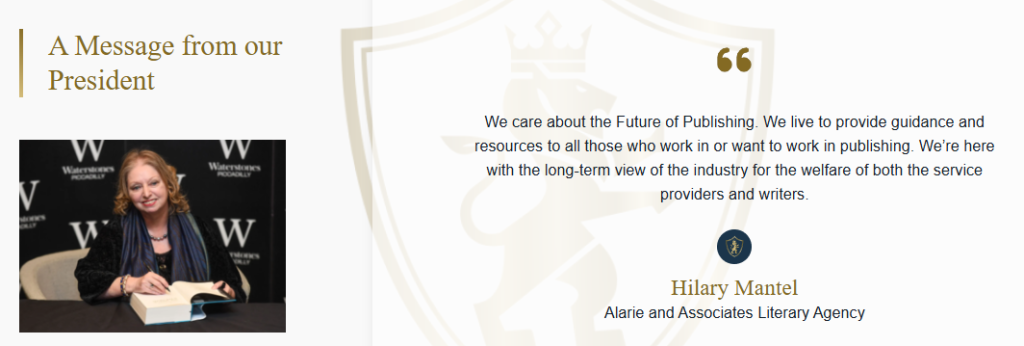
Shouldn’t that be “our former President”, since Hilary Mantel died two years ago? Or is she leading from the afterlife? As for Alarie and Associates Literary Agency, I can find no evidence that it exists or ever has existed.
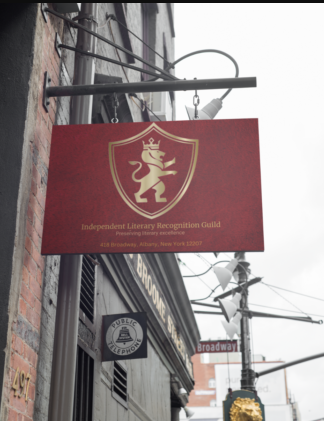
Other oddities: if ILR’s recent conference was really hosted by Google, as claimed, why is the ILR website the only mention of it across the whole wide web? Why doesn’t ILR know how to properly spell Charles Dickens’s name? Why does the ILR membership page refer to an application form but not include one? Why does the image (in the website footer) of ILR’s sign hanging in its Albany NY location appear to actually be a manipulated image of a completely different sign hanging next to Kenn’s Broome Street Bar in New York City?

Call me cynical, but I can’t help suspecting that the reason for ILR’s existence is less the policing of the publishing industry than the selling of services. Not membership so much (since, thanks to the lack of an application form, you can’t sign up for it) but rather editing (by editors who are said to be “top” but whose names are not disclosed) and the magazine advertising solicitations mentioned at the top of this post. And ILR’s ad prices are truly eye-popping: $7,199 for a two-page spread, $3,899 for a full page, $2,099 for a half page. The cheapest option: $899 for one-eighth of a page (a thumbnail cover and some tiny print). As for the magazine itself, ILR offers a sample of what’s said to be the Summer 2024 issue, which includes misattributed photos and a masthead of staff with names that read like the cast of a Regency romance. Otherwise, there’s no evidence of its existence.
Based on all of the above, it doesn’t seem unreasonable to conclude that ILR is a scam, if an unusually elaborate one. But what kind of scam?
Well, per its Companies House listing, ILR’s Director is (or was–remember, the company was dissolved last year) one Willliejun Rey Galela Navarce. A little websearching finds Williejun in charge of another business venture, Filmways Pictures Multimedia Production…which is on my Overseas Scams list thanks to multiple reports of its deceptive solicitations and bogus service offers (such as screenplays for $10,000). Filmways is registered in–you guessed it–the Philippines.
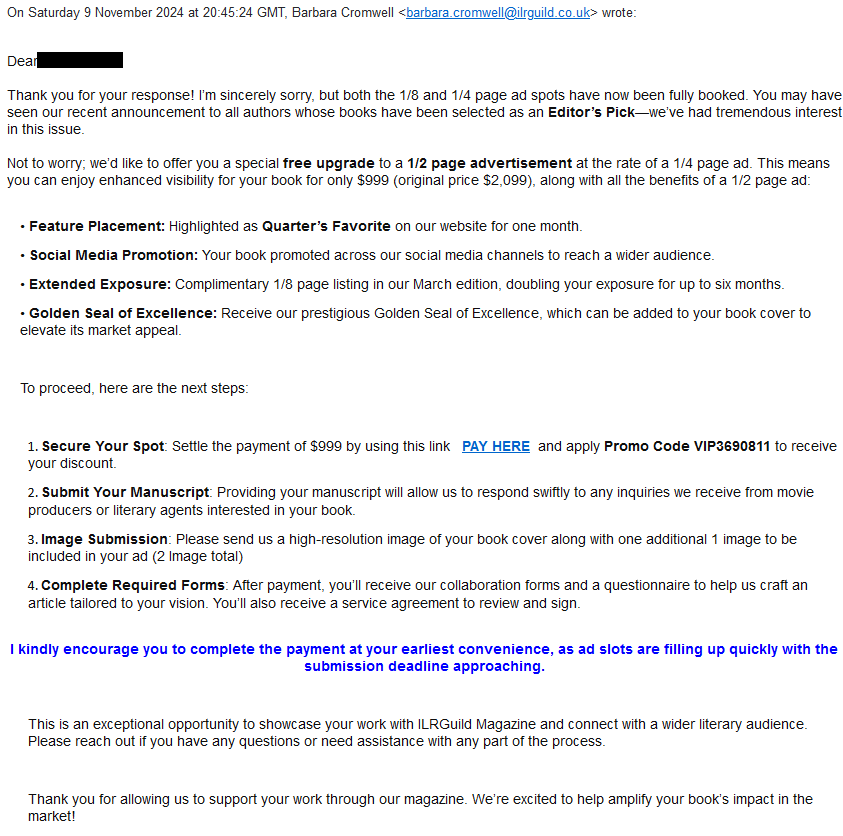
UPDATE 3/30/25: Here’s an example of ILR’s pay-to-play magazine pitch: a pretend “out of stock” for the 1/4-page space the author asked for, with a pretend upgrade to a half-page ad for “only” $999 (original price: $2,099). And look at all those benefits!
The writer did get their (digital) Golden Seal of Excellence. They did not get any confirmation or evidence that their ad had been run in ILR’s (probably non-existent) magazine.
ACQUISITION DATABASE
The writer who alerted me to the existence of Acquisition Database (AD) was referred to it by a known scammer, who claimed that it could help connect the writer with film producers. Since scammers don’t tend to make recommendations in writers’ best interests, that would tend to disqualify AD right off the bat.
I always dig deeper, though. Here’s how AD describes itself.

Technology! Democratization! Empowerment! AD would like us to believe these claims are not just a bunch of buzzwords: they allege that more than 400 films have been made and “thousands” of scripts acquired or optioned thanks to presence on the AD platform.
Somewhat undercutting these claims is the absence of any mention of any successful projects. Surely a reputable platform would provide examples? It’s a form of advertising, after all. (There s an Acquired Works link in the top menu, but clicking on it leads to a member login screen). And while it would seem that an organization with such an excellent track record would have built a considerable web presence in the 24 years it has supposedly been operating–deal reports, Variety mentions, references to events and competitions–none can be found. AD’s entire internet footprint is…its own website.
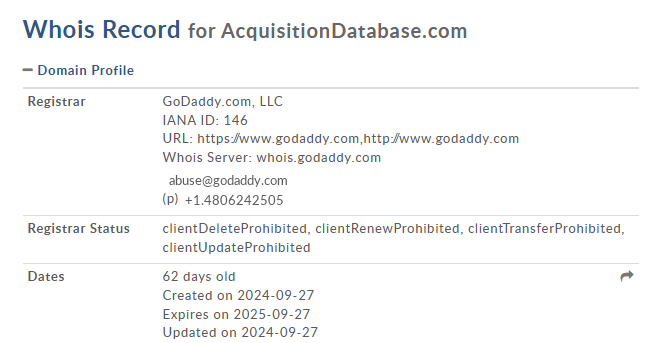
Plus, while a company founded at the turn of the century, when the digital era was still dawning, might not have rushed to create a website right away, you’d think it would have done so sooner than 62 days ago.
Most of AD’s content–or apparent content, since there’s no way to verify it actually exists–is hidden behind the member login screen. Enough is visible, however, to suggest a high degree of fakery.
For example, photos of purported AD staff have the airbrushed quality, inauthentic-looking hair, and indeterminate backgrounds that are characteristic of many AI-generated images, and some include characteristic errors as well: in the left-hand image below, what looks like a pendant is the top button of CEO Alexandra Reed’s shirt, which has migrated to her neck. Also apparently AI-generated are the images that accompany the testimonials: “Aisha Khan, Author”, on the right, appears to have just three fingers on her right hand and some kind of bizarre bulge on her left in place of a pinkie (mutant hands are another telltale AI error). The rendering of the keyboard on her laptop also leaves a lot to be desired.


From the website’s footer, it’s possible to access AD’s Directory, but this is less an genuine directory than a random jumble of not-necessarily-relevant companies bot-scraped from the web mixed in with AI-generated “creators and professionals” (see, for example, “literary commentator” Samantha Thornfield, whose T-shirt bears the kind of gibberish slogan AI often produces when asked to do lettering).
So what’s the purpose here? You know it: money.
The small amount of content AD makes available prominently includes its membership signup page, which invites filmmakers, writers, publishers, and readers to become part of the AD community…for truly insane amounts of cash.
Are you a director? Choose between the Explorer plan ($599/month–yes, month), the Visionary plan ($999/month), or the Mastermind plan ($1599/month). If you’re an author, you can spring for Emerging Talent ($159/month), Professional Creator $359/month), or Master Storyteller ($899/month). For publishers and bookstores, plans range from $399-$699/month. Readers start at $99/month and top out at $399/month. Oh, and there’s a “one-time setup fee” of $50 that they don’t tell you about till you get to the payment screen.
What do these exorbitant fees buy? The plans tout plenty of benefits: submission tools, webinars, special events, access to industry professionals, marketing and promotion, a newsletter, and more. What are the odds, though, that a company that fakes its own officers is going to deliver according to promise? Even if that weren’t the case, almost every link on AD’s website leads to the member login screen, making it impossible to assess its offerings or even confirm that they are real–which means you’d have to pay in order to find out what, if anything, you were going to get. That’s never a smart move.
Not to mention, there are plenty of no-cost or less expensive alternatives are available. If you’re a writer, you can get most of the same benefits from QueryTracker (no charge) and Publishers Marketplace ($275 per year). If you’re a scriptwriter or filmmaker, you can sign up for free on Stage 32, where the webinars cost less than $50.
The one possible bright spot: the fees are so ridiculous that many creatives who might be drawn in for smaller amounts of money will be turned away. Although I’m constantly amazed at the huge sums writers lose to scams, even people on limited incomes. So maybe not.

Thank you so much, Victoria, for sharing this with us. It’s greatly appreciated.
Were there any sources that you contacted via phone, or direct emails, to verify this scam?
Neither site provides email addresses, but I used the chat bot on the ILR website and the contact form on the Acquisition Database website to introduce myself and ask if they they’d be willing to answer questions.
Unsurprisingly, I didn’t receive a response from either organization.
IMO, when a company lies about its founding dates, appropriates stock photos, manipulates images to present a false appearance of legitimacy, and generates staff and testimonials via AI, it’s pretty compelling proof of a lack of genuineness.
Thank you for your excellent, hard work informing us solo/aspiring free-lancewriters about these scams. I would love a list of honest, honourable publishers/editors to whom we could send our work to in the hopes of being published, especially those agents who aren’t only interested in charging us exhorbitant amounts for our work, as many of us have only begun writing seriously after retiring from work and depend on a pension. In the case of many of us fledging authors, it is not making a fortune that counts but rather our pride and the satisfying confirmation of the quality of our work.
Great post!
Thank you so much for a very informative post. I recently submitted my manuscript to Austin Maclauly Publishing in the UK who have agreed to review it . Have you heard of them? If so are they reputable?
I’m afraid not. Writer Beware considers Austin Macauley (along with closely-related UK companies Pegasus Elliot Mackenzie and Olympia Publishing) to be predatory vanity publishers. More info here: https://writerbeware.blog/2019/07/12/seven-prolific-vanity-publishers-austin-macauley-publishers-pegasus-elliot-mackenzie-olympia-publishers-morgan-james-publishing-page-publishing-christian-faith-publishing-newman-springs-publish/ (If you have a question, it’s always a good idea to do a search on the blog–I may already have written about it.)
What would we do without you, Victoria? You do so much hard work into exposing those scams. Work that, if we undertook ourselves would mean little or no writing getting done.
This sounds, on the face of it, anyway, a sophisticated one, but I think their exorbitant fees will deter most people. I, for one, can’t afford such prices.
Thank you again for a wealth of information. With about 3 offers a month for ‘help’ with my current books , I am now so.much more award that 99.9% of these emails are from scammers. Sadly. Margaret from Australia
Thank you for your work in identifying organizations that are well versed in walletectomies (removal of your money).
There seems to be an endless supply of literary scams out there. I’ve been the target of many. Some are obvious scams other camouflage themselves as “professional outrearch”. Not sure where self-published authors can get a break.
Victoria,
Thank you for an excellent buyer beware article about con artists. Over the years, I have received similar solicitations. I plan on forwarding your Writer Beware article to authors who may be targeted in future solitications.
Thank again
Jim Stott
Thank you!
The first sentence of the “About Our History” was either back-translated into English or, more likely, written by a janky AI. One need go no further (but thanks for all this!).
Genius. Thank you.
That is SOOOOO not what we were wearing in the 1980s.