Latest Posts

Alert: A Scammer is Impersonating the Alliance of Independent Authors

Invitation to submit your book for the 2024 Best Indie Book Award.
 
Dear [redacted]
 
This notice aims to inform you that The Alliance of Independent Authors has partnered with BIBA (Best Indie Book Awards) to give ALLI author members a 95% discount on participating in the 2024 literary contest. Best Indie Book Award® (or BIBA®) is an international literary contest recognizing outstanding achievements by indie authors.
 
Authors are encouraged to submit their books for the 12th Annual Best Indie Book Award Contest on or before May 30th. Use the referral link below to submit your book, all genre(s) categories have been paid for by being an ALLi author member.
 
https://allianceindependentauthors.booksaward.org/[redacted]/Official_Entry.html
 
kind regards
ALLi Support Team

If you've received this email, beware: it's a phishing scam.

The Alliance of Independent Authors has confirmed to Writer Beware that it did not send this email, which I'm told was received by both ALLi members and non-members. The scam solicitations are personalized with writers' email addresses and names, and the "Official Entry" link at the bottom is also personalized (which is why I've redacted part of it).

Note the fake email address (ALLi's real email is @allianceindependentauthors.org). The scam domain is just 8 days old:

Contract Critique: Dashtoon

Header image: Dashtoon logo

Dashtoon is a startup (founded in late 2022) digital comics creation platform that promises to revolutionize the comics industry by allowing anyone to create their own webcomics using generative AI, and to distribute and monetize their creations via the Dashtoon app. Licensed in Delaware USA and doing business as Dashverse Corp, it's yet another shiny entry into our new AI-crazed reality, and has garnered venture capital investment and positive media coverage.

Via its Authors Program, Dashtoon also licenses books and stories and turns them into comics, covering all production costs and paying authors a royalty. It also appears to be looking to license already-published comics for distribution on its platform. Here's an example of the emails it has been sending out (this is a form email; I've seen several of them):

I've also had the opportunity to see a number of Dashtoon contracts, both exclusive (for book adaptations) and non-exclusive (for distribution of already-published work).

Guest Post: How a Book Really Becomes a Movie

Header image: Clapperboard lying on top of an open book (Credit: Billion Photos / Shutterstock.com)

Book-to-film scams are extremely common these days. If the publishing industry is opaque and secretive, the movie biz is even more so, and scammers take full advantage.

From disreputable marketers claiming to take your book to pitch events, to fake agents offering to represent you to major production companies, to scammers impersonating those production companies themselves, hordes of fraudsters are soliciting writers by phone and email with tempting-sounding "offers" and "opportunities" that they promise will route your book directly to the silver screen.

In reality, of course, the fraudsters have no Hollywood connections. The sole aim of these solicitations is to trick you into paying large amounts of money for products or services--screenplays, pitch decks, "cinematic trailers", and more--that you don't need and that may not even be delivered.

The Scam of “Book Licensing”

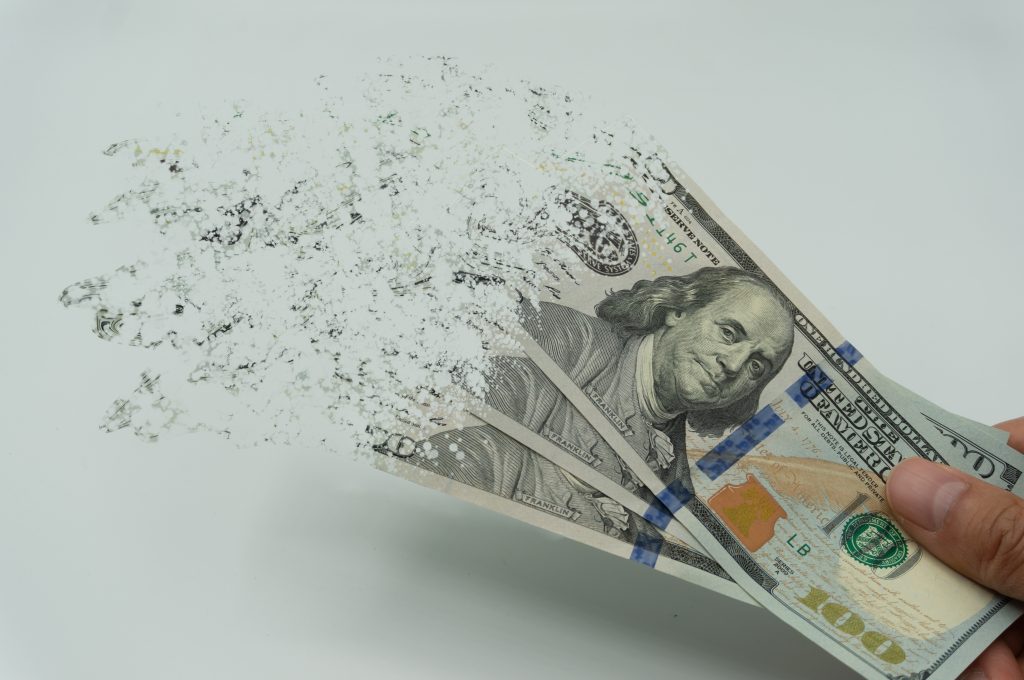
Header image: hand holding a sheaf of $100 bills that are disintegrating and flying away (Credit: evan_huang / Shutterstock.com)

A few weeks ago, I wrote about the common scam of "book returns insurance", in which scammers take something real (book returnability, a normal element of book publishing and selling) and spin it into a nonexistent "service" (a kind of "insurance" product, which you supposedly have to buy if you want your books to be returnable) for which they can charge big bucks.

Today's blog post focuses on the similarly deceptive scam of "book licensing". Like "returns insurance", this fictional item is based on something real (the licensing of rights that's necessary for publication) that scammers have distorted into an imaginary requirement they can monetize (a book license you supposedly must obtain in order for your book to be published or re-published).

To be clear, there is no such thing as a "book license"--at least, not in the sense that scammers use the term, meaning an item like a driver's license or a fishing license that you have to take steps to acquire and must have in order to do the thing associated with the license. As the copyright owner of your work (which you are, by law, from the moment you write down the words), you have the power to grant licenses for publication, but you do not have to obtain any kind of license or permission in order to do so. By re-framing licensing as something authors have to get, rather than something they are empowered to give, scammers turn the reality of licensing on its head.

To CCB or Not to CCB: The Question is Still Out

Header image: Logo of the Copyright Claims Board

It’s been more than a year since my last post about the now not-so-new Copyright Claims Board (CCB).

Victoria covered the CCB when it first started hearing claims in June 2022, and her post gives a good summary of how it operates and what it is supposed to accomplish. The short version:  The CCB was created as a judicial body under the US Copyright Office to administer small copyright claims that would be too expensive and/or time-consuming in federal court.

At the time I confess I was worried about an eventuality that fortunately hasn’t come true. There are vanishingly few copyright trolls trying to use the CCB to collect money from innocent or ignorant individuals by scaring them into paying settlements. On the other hand, it has worked for some business to business claims: Joe Hand Promotions, Inc., a company that “serves as the exclusive distributor of all Ultimate Fighting Championship (UFC) and select boxing pay-per-view programming” is by far the most frequent CCB claimant, with forty-five claims and counting, mainly against bars and restaurants, and many of those are withdrawn from consideration by the CCB and apparently settled privately.

The Impersonation List

Header image: man holding image of woman's face in front of his face as a disguise (credit: StunningArt / Shutterstock.com)

The most pernicious scams focused on English-speaking writers these days come from overseas: publishing/marketing/fake literary agency scams from the Philippines, and ghostwriting/editing/marketing scams from Pakistan and India.

That's not to say there aren't plenty of scammers in the USA, Canada, UK, and Australia. And scams aren't all you need to watch out for: inexperienced literary agents (aka schmagents) and incompetent publishers can also hijack your work and create major problems for you. Right now, though, overseas scams are the ones you're most likely to encounter, and they are the most predatory.

An increasingly frequent fraudulent tactic, used primarily by the Philippine scammers, is impersonation: of reputable literary agents, major publishers, renowned movie production companies, even bookstores and organizations like the American Booksellers Association. The aim is to convince you that you're on the cusp of real, reputable representation, publication, immortality on the silver screen, books on shelves nationwide...there's just something you have to pay for first (a screenplay, a "cinematic trailer", an IP lawyer to handle contracts, "book licensing", a "book returnability program"...the list is endless). Once the scammer gets you on board, it's open season on your bank account: you will be heavily pressured to spend more and yet more money on goods and services that may be hugely overpriced, entirely fictional, never actually delivered, or all three.