
Latest Posts

Wolves in Authors’ Clothing: Beware Social Media Marketing Scams

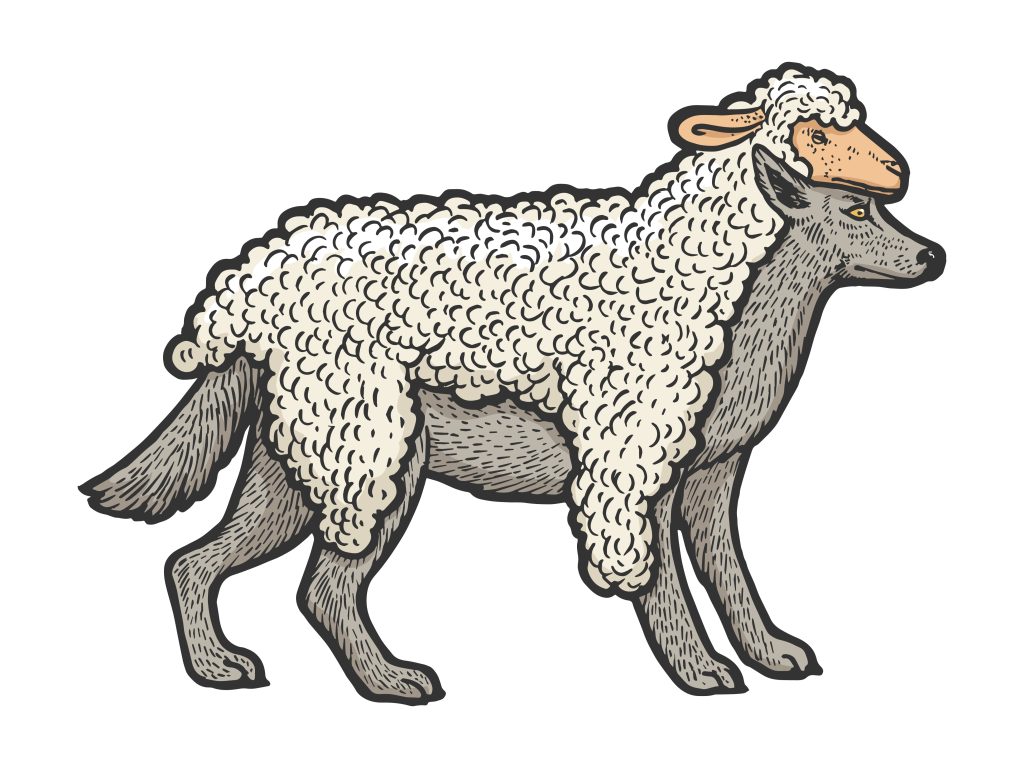
Engraving of a wolf wearing a sheep's coat as a disguise (Credit: Alexander_P / Shutterstock.com)

For authors, one of the (these days, increasingly few) positives of social media is connecting with other authors. Especially if no one else in your family/social circle is involved in the arts (raises hand), it's great to be able to find a community where you can discuss craft, business, the ups and downs of querying, the challenges of self-publishing--both sharing your own experiences and learning from others'.

But...what if that friendly author who just DM'd you on one of your social media accounts isn't actually a writer, but someone who wants to sell you worthless "marketing" services?

I'm getting an increasing volume of reports from writers who've been targeted by this bait-and-switch scheme. It starts with a private message from a profile that appears to be that of another writer--often, a real writer whom the scammer is impersonating--just saying "hi" and claiming to want to connect. A short back-and-forth follows, with the scammer quickly getting to the point: a referral to a terrific marketer or "agent" who, they claim, produces fantastic results! If the targeted author reaches out the recommended person, they receive a heavy pitch for some sort of marketing package or service...for which, of course, they have to pay. If they do, the odds are high that they will never see their money again.

Facing Author Lawsuits, Shawline Publishing Re-Brands as New Found Books

I first heard of Australia-based Shawline Publishing in 2021, thanks to a question from an author who'd been offered a contract.

Shawline was (and still is, under its new name) a self-styled hybrid, meaning that it charges fees. Its website loudly touts the "affordability" of its services, without mentioning specific amounts or revealing that required author "investments" are in the mid-four figure range. As of 2021, Shawline was charging AUD 4,500 (at the time, equivalent to approximately USD 3,380), with company documents claiming investments were "mutual" and Shawline said to be "the larger investor" (a frequent, though not necessarily true, claim by fee-based publishers). As is common with such publishers, the initial fee had the potential to be considerably higher thanks to add-ons such as website creation, printed materials, book videos, audiobook creation, ad campaigns, and more.

Contracts shared with me in 2022 and 2023 revealed the evolution of Shawline's fees, which increased to AUD 5,450 (USD 4,133) and then to AUD 6,990 (USD 4,997). The contract itself, on the other hand, stayed largely the same (you can view the most recent version I've seen here).

The Latest Fake Literary Agencies

Header image: the word "real" fading away and being replaced by the word "fake" (Credit: Net Vector / Shutterstock.com)

Not too long ago, I published a post with tips and techniques to help writers spot a fake literary agency. This is a skill set it's important to have, because overseas scammers are increasingly posing as literary agents, and some are going to elaborate lengths to create websites that, at least at first glance, look pretty convincing.

In this post, I'll be looking at the latest crop of fakers to come across my desk. But first, for comparison purposes...

Most or all of these will appear on its website:

The Literary Reporter: A New Book Promo Site That’s Rather Less Than It Appears

Header image: The Literary Reporter logo

Just last week, I began getting questions about email solicitations from a website I wasn't familiar with called The Literary Reporter (TLR).

The (extremely verbose--more on that below) emails offer authors placement for their books on the TLR website, plus promotion to "supported book groups" (none named) and a listing in the TLR newsletter, which claims a subscribership of 25,000. For this "unmatched exposure", writers only have to pay a one-time fee of $75.

Worth it? the authors who'd been solicited wanted to know. So I did some research.

Evaluating Publishing Contracts: Six Ways You May Be Sabotaging Yourself

Header image: word cloud featuring the word Contract (credit:  www.epictop10.com / Flickr.com)

(If you're a regular reader and are feeling some deja vu at the title of this post, it's because I've published it before, in a slightly different form. I'm updating and re-running it because I've gotten so many questions about these issues over the past few months.)

Several years ago, a now-defunct literary magazine called The Toast gained notoriety by demanding that its writers surrender copyright. In the widespread discussion that followed exposure of this author-unfriendly policy, I was struck by the number of comments from writers who seemed to think that a bad contract clause was not so very awful if (pick one) the publication was great; the people who run it were great; the bad contract clause was not always enforced.

That's all very well. But this kind of thinking is exactly how writers get screwed: by making assumptions about a publisher's intentions, by letting their emotions overrule their business sense, and by forgetting that, in the author-publisher relationship, the publishing contract is the bottom line.

The Curious Case of Fullers Library and Its Deceptive Link Requests

Header image: Fullers Library website header, with "fullers library" in medievalish font on a background of bookshelves

This isn't strictly writing-related, but it is the kind of weird rabbit hole I enjoy going down, and it's a writer (and artist) who drew my attention to it.

The writer got in touch to share an email with me.

A local library, a young writer, a suggestion for a helpful resource to add to a list of similar helpful resources--sounds pretty normal, right? The writer maintains a page with a large list of links to, among other things, writing and arts organizations, so the suggested article seems like a good fit. Who wouldn't want to make young Nora's day?