Latest Posts

Anthropic Copyright Settlement: Some Things We’ve Learned

Anthropic logo on a dark, shadowy background (Credit: Samuel Boivin / Shutterstock.com)

A quick refresher on the largest copyright recovery in history (for a lot more detail and context, see the post I wrote last year):

In 2024, a group of authors filed a copyright infringement class action lawsuit against AI company Anthropic over its creation of an enormous library of digitized books to train its Claude chatbot. In addition to buying and scanning physical books, Anthropic also downloaded millions of works that had been illegally uploaded to pirate sites—all without permission from the works’ creators.

In 2025, the judge in the case ruled that Anthropic’s digitization and training on legally acquired physical books was fair use, as Anthropic claimed—but its use of pirated works was a massive infringement of copyright that justified a trial. Facing potentially catastrophic payouts for hundreds of thousands of infringed works (under US copyright law, the maximum award of statutory damages for willful infringement is $150,000 per work), Anthropic chose to settle, agreeing to create a fund of $1.5 billion from which rightsholders would be paid.
Author Complaints at Starfish Bay Publishing

Header image: Starfish Bay Publishing logo

I first heard of Australian children's publisher Starfish Bay Publishing (SBP) in 2024, thanks to a question from an author about the advisability of investing in SBP's Author Supported Traditional Publishing Programme. Implemented, SBP's website explained, because of "the severe effect the pandemic had on our publishing business", this program--despite using the word traditional--required authors to come up with a "temporary loan" of AU$6,000.

Here's how SBP's website described the Author Supported program at the time I received the question, from an October 2024 archive of the SBP website (thank you, Wayback Machine).

I told the author that including words like "traditional" and "loan" and "temporary" in your demand for money doesn't change the fact that a large amount of cash is due upfront as a condition of publication. Pay to play is pay to play. Even if SBP sincerely intended to pay the money back within two and a half years, what guarantee was there that it would still be in business at that point? Maybe not terrific odds if, a full four years after the pandemic, its business was still so precarious that it had to rely on its authors for financing. The whole thing seemed highly questionable to me.

More Rights Grabs from Must Read Magazines

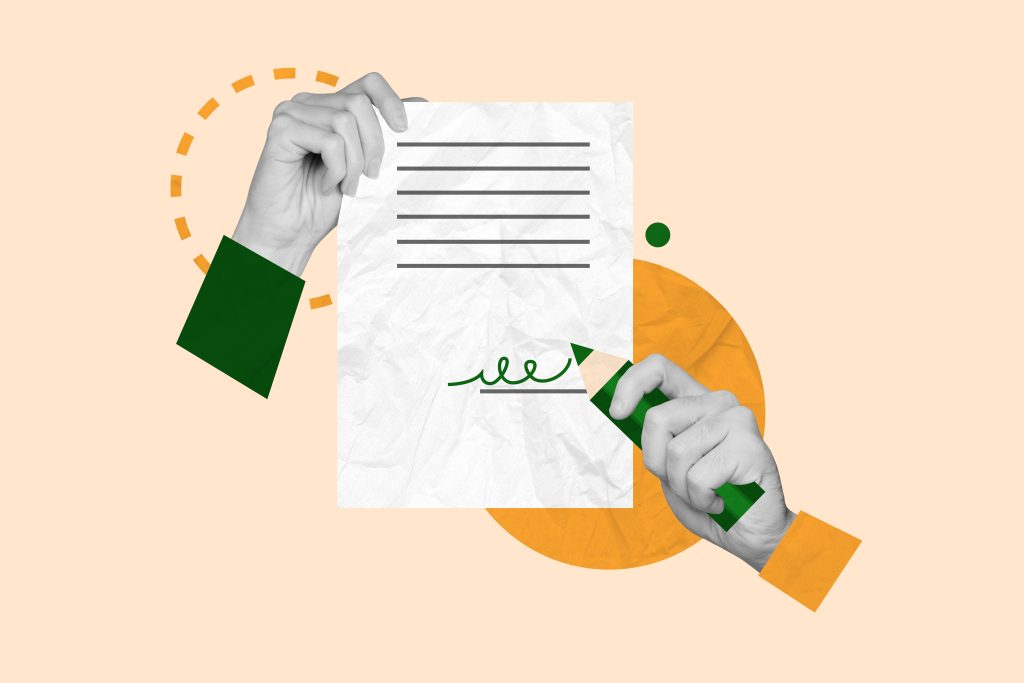
Header image: photo and graphic collage of two hands, one holding and one signing a paper contract, on a pale orange background (Credit: Roman Samborskyi / Shutterstock.com)

In early 2025, a group called Must Read Magazines (MRM) acquired a suite of five well-known genre fiction magazines: Asimov’s Science Fiction, Analog Science Fiction and Fact, The Magazine of Fantasy & Science Fiction, Alfred Hitchcock’s Mystery Magazine and Ellery Queen’s Mystery Magazine. My July 2025 blog post about the acquisition, and the ensuing backlash over unfriendly contract terms, has all the details, but here's the TL;DR.

News of the acquisition came out of the blue. But despite how little was known about MRM and its founders, as well as concerns about consolidation, there was hope that the new ownership might help the magazines survive. Analog, Asimov’s, and F&SF had been steadily losing print sales and subscriptions over recent years, and F&SF had been the subject of complaints of contract and payment delays for some time.

It soon became clear, however, that MRMs' new contracts were significantly author-unfriendly, with sweeping claims on a large menu of rights (including rights, such as merchandising, that aren't typically part of magazine contracts), no provision for rights reversion, and, troublingly, a moral rights waiver (for more on moral rights, and why such waivers are contract red flags, see my blog post). Although MRM was willing to negotiate changes, some writers described the process as unduly time-consuming and convoluted, with the moral rights waiver being a particular sticking point.

How Those Personalized Generative AI Scam Emails Are Built

Header image: white robot fingers typing on a gray keyboard against black background. Above the keyboard hovers a visualization of an email message: a document halfway inside a mailing envelope (Credit: Koupei Studio / Shutterstock.com)

One of the things I often hear from writers whose inboxes are crammed with incredibly personalized marketing or book club or editor impersonation emails--you know, the ones that make it seem the sender has first-hand knowledge of your book and your bio, and is really impressed with both--is "How are these things created? How do they get so many of the details right?"

The answer, of course, is generative AI, which makes it possible to scrape authors' data from the internet and regurgitate it in response to prompts fed into a chatbot. Mostly the chatbots get it right. But if you've gotten more than a few of these solicitations, it won't be news to you that they do make mistakes: someone else's name, wrong or nonexistent book title, hallucinated bio details.

Occasionally, those mistakes provide a little insight into how the solicitations are built and targeted.

Love v. Wiley Book Writers: A Publishing Scam Gets a Rare Comeuppance

Header image: touchscreen with law-related icons (gavel, court building, open book, etc.) with hand selecting scales of justice (Credit: mayam_studio / Shutterstock.com)

Raymond Love just wanted to publish his children's book with a trustworthy self-publishing company. Instead, he found a scam that took his money and delivered nothing of value.

For most authors in this situation, lost cash and lost dreams are unrecoverable, but Raymond Love's story has a different ending. He sued--and won.

The legal documents in his case provide fascinating insight not just into the techniques scammers use to bleed their victims of resources--manipulating them with constant and egregious lies into believing that services are being delivered and promises fulfilled--but also the complex web of shell companies and shady operators that keep the scam humming.

Anthropic Copyright Settlement: Publishers Are Making Incorrect Claims on Authors’ Payouts

Anthropic logo on a dark, shadowy background (Credit: Samuel Boivin / Shutterstock.com)

This week, many authors who are part of the Anthropic copyright class action settlement began receiving notices like these:

The one on the right invites authors to review and confirm their claims: just making sure all is as it should be. If you received the one on the left, however, all is not as it should be: there's some conflict between rightsholders' claims that needs to be resolved.

Upon accessing the portal (which doesn't seem to have a formal name, so I'll call it the "disgreement portal"), many authors who received the left-hand notice made an unwelcome discovery: their publishers are making claims on their allocations (aka the payouts for their works) that are simply...wrong.